Is it possible for a mirror to tell you your stress level every morning?
A smart mirror health check could read stress and wellness from your face each morning. We examine the rPPG science and what device makers need to embed it.
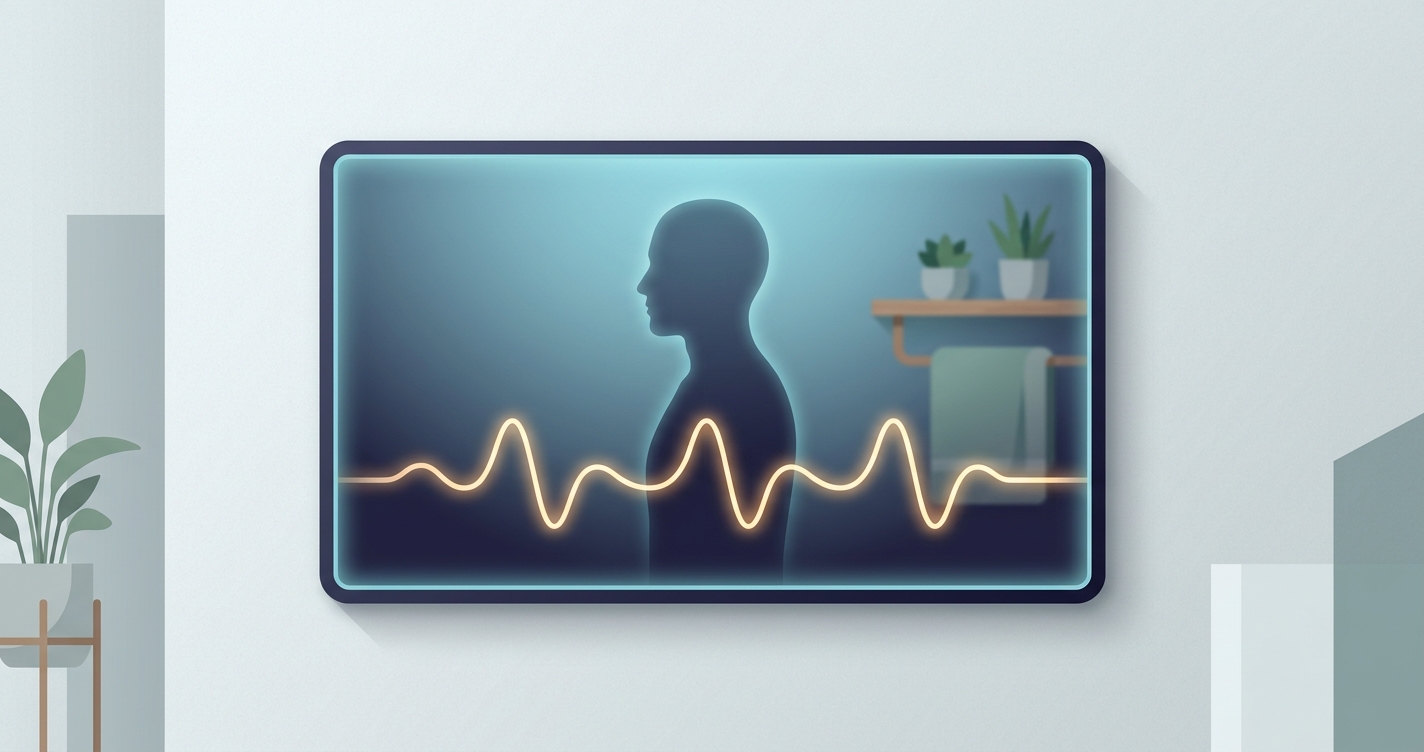
The bathroom mirror is one of the few surfaces almost every adult looks at within minutes of waking, usually with a steady gaze, good lighting, and a few seconds of stillness. For product teams at smart device manufacturers and IoT platform providers, that daily ritual is starting to look less like a grooming habit and more like an untapped sensing window. The idea behind a smart mirror health check is straightforward: while you brush your teeth or check your reflection, an embedded camera quietly estimates physiological signals such as heart rate, breathing rate, and heart rate variability, then translates those into a simple morning readout of how rested or stressed you appear to be. The harder question is whether the underlying signal is good enough, and what it actually takes to build it into consumer hardware that ships at scale.
"The smart mirror market is projected to reach roughly USD 4.1 billion in 2025, with health monitoring repeatedly named as a primary growth driver alongside home, retail, and automotive applications." - Mues-Tec Smart Mirror Market analysis, 2025
What a smart mirror health check actually measures
A smart mirror health check does not measure stress directly. There is no stress sensor. What the camera can capture is remote photoplethysmography, or rPPG, the same optical principle behind a fingertip pulse oximeter, applied at a distance. As blood pulses through the capillaries in your face, it changes how skin absorbs and reflects ambient light. Those changes are far too subtle for the human eye, but a standard RGB camera, combined with signal processing, can recover a blood volume pulse waveform from facial video.
From that waveform, an embedded system can derive several values that matter for a wellness readout:
- Pulse rate, measured in beats per minute from the peak-to-peak timing of the recovered signal.
- Respiration rate, estimated from the slow modulation the breathing cycle imposes on the pulse.
- Heart rate variability (HRV), the beat-to-beat fluctuation in timing that reflects autonomic nervous system balance.
HRV is the bridge to anything resembling a stress score. A large body of clinical work treats reduced short-term HRV as a marker of sympathetic dominance, the physiological state associated with stress and poor recovery. A morning mirror reading high resting pulse and suppressed HRV is, in effect, showing a snapshot of autonomic tone, not a diagnosis of how someone feels. That distinction matters enormously for how device makers position the feature and what claims they can responsibly make.
How the mirror approach compares to other morning options
A mirror is not the only way to get a morning wellness signal. The relevant comparison for a product team is between embedding rPPG in a mirror versus relying on a wearable, a dedicated kiosk, or a contact device. Each has a different cost, friction, and signal-quality profile.
| Approach | Contact required | Daily friction | Signal quality for HRV | Hardware cost to OEM | Best fit |
|---|---|---|---|---|---|
| Smart mirror health check (rPPG) | None | Very low, passive during routine | Good for trends, weaker for beat precision | Camera plus edge compute | Always-present home fixture |
| Wrist wearable | Yes, worn continuously | Low but requires charging and compliance | Strong, continuous overnight data | Full device build | Continuous tracking |
| Dedicated clinical kiosk | None or finger pad | Moderate, user must approach | Strong with controlled framing | Higher, purpose-built | Pharmacy, clinic, workplace |
| Contact finger sensor | Yes | High, deliberate measurement | Very strong | Low sensor cost | Spot checks |
The mirror wins on one axis that the others struggle with: zero added behavior. There is nothing to wear, charge, or remember. The tradeoff is that face-based rPPG in a real bathroom contends with motion, variable lighting, makeup, facial hair, and a measurement window of only a few seconds. That is why most credible designs frame the output as a trend indicator across days rather than a single absolute number.
Industry applications for embedded mirror sensing
Consumer wellness and smart home
The most obvious target is the connected home. A mirror that logs a morning pulse and HRV trend can feed a broader wellness dashboard, nudge a user toward a calmer start, or sync with sleep data from other devices. The Withings Omnia smart mirror concept shown at CES 2025 signaled where major consumer brands see this going, pairing a mirror form factor with sensors and AI for heart and metabolic readouts. For IoT platform providers, the mirror becomes another node generating structured health events.
Senior living and aging in place
Healthcare-oriented mirrors are forecast to grow at roughly a 10 percent compound annual rate through 2031, pushed by telehealth and aging-in-place demand. A passive morning check is attractive for older adults who resist wearables. A mirror that flags a sustained shift in resting pulse or breathing rate can prompt a caregiver check without asking the resident to do anything new.
Hospitality and workplace wellness
Hotels and corporate wellness programs are experimenting with embedded screening in shared spaces. A mirror in a gym, locker room, or wellness suite can offer an optional, contactless readout that fits brand wellness positioning without the liability of a medical claim.
Current research and evidence
The research base for camera-based stress estimation has matured quickly. A 2024 study, "Enhancing Stress Detection: A Comprehensive Approach through rPPG Analysis and Deep Learning Techniques," published in the peer-reviewed literature indexed by the National Institutes of Health, combined rPPG-derived features with deep learning models and reported that camera-based HRV features track stress states with meaningful accuracy at the group level. Earlier work from researchers at the Universitat Politecnica de Valencia demonstrated stress detection using HRV analysis from a low-cost camera, establishing that the approach does not require specialized optics.
The honest caveat appears consistently across reviews. A 2025 review of rPPG for health assessment, informed by IntelliProve technology and indexed through the NIH, notes that while rPPG performs well for group-level analysis, individual-level HRV estimates can still be limited by motion artifacts and lighting variability. Separately, a 2024 longitudinal study on smartwatch HRV and self-reported depression and anxiety symptoms found measurable associations between HRV metrics and mental health symptoms, which supports HRV as a signal worth surfacing even when the source is optical rather than electrical.
For device makers, the takeaway is consistent. The signal is real and trend-useful, the absolute precision is conditional on capture quality, and the engineering effort sits squarely in controlling the capture environment and the embedded processing pipeline rather than in the optics.
The future of the smart mirror health check
Three forces will shape where this goes. First, edge compute keeps getting cheaper, which means the rPPG inference can run locally on the mirror without streaming facial video to the cloud, a critical point for privacy-conscious buyers and for regions with strict biometric data rules. Second, multimodal fusion is coming. A mirror that combines rPPG with weight from a connected scale, sleep data, and ambient context can produce a far more stable morning wellness picture than any single sensor. Third, regulatory framing will harden. The gap between a wellness indicator and a regulated medical measurement is where most product roadmaps will live, and the safer near-term position is trend-based wellness rather than clinical diagnosis.
The broader IoT-in-healthcare market, valued in the tens of billions in 2025, gives this feature room to grow as a differentiator rather than a standalone product. The mirror is unlikely to replace a wearable or a clinic visit. It is far more likely to become a quiet, always-present checkpoint that catches drift in the metrics that matter and routes the user toward more precise tools when something looks off.
Frequently asked questions
Can a mirror really detect stress, or just heart rate?
A mirror detects optical pulse signals, then derives heart rate, breathing rate, and HRV from them. Stress is inferred from HRV patterns, not measured directly. It is best treated as a wellness trend indicator rather than a clinical stress diagnosis.
How accurate is rPPG compared to a chest strap or wearable?
For average pulse rate under good conditions, rPPG can be close to contact methods. For beat-to-beat HRV, accuracy depends heavily on stillness and lighting, so most designs report multi-day trends rather than single precise values.
Does the mirror need to send my face to the cloud?
It does not have to. With sufficient edge compute, the rPPG pipeline can run entirely on the device, extracting only the derived metrics and discarding the video. This is the preferred architecture for privacy and biometric data compliance.
What does a manufacturer need to add this to a mirror?
The core requirements are a suitable RGB camera, adequate and consistent lighting, an embedded processor capable of running the rPPG signal pipeline in real time, and a software engine that handles face tracking, signal recovery, and metric output.
For device makers and IoT platform providers evaluating whether a smart mirror health check belongs on the roadmap, the engineering question is rarely the optics and almost always the embedded pipeline and integration path. Circadify is addressing exactly this space with an embedded rPPG engine designed to run on cameras, tablets, smart displays, and clinical hardware. Teams scoping a mirror or kiosk build can start with the hardware integration guide for clinical kiosks to see what an embedded contactless vitals integration involves.