How can a school entrance monitor help spot a fever before it spreads quickly?
How school health screening at entrance kiosks uses contactless temperature and vital checks to catch illness early, and what the research says about accuracy.
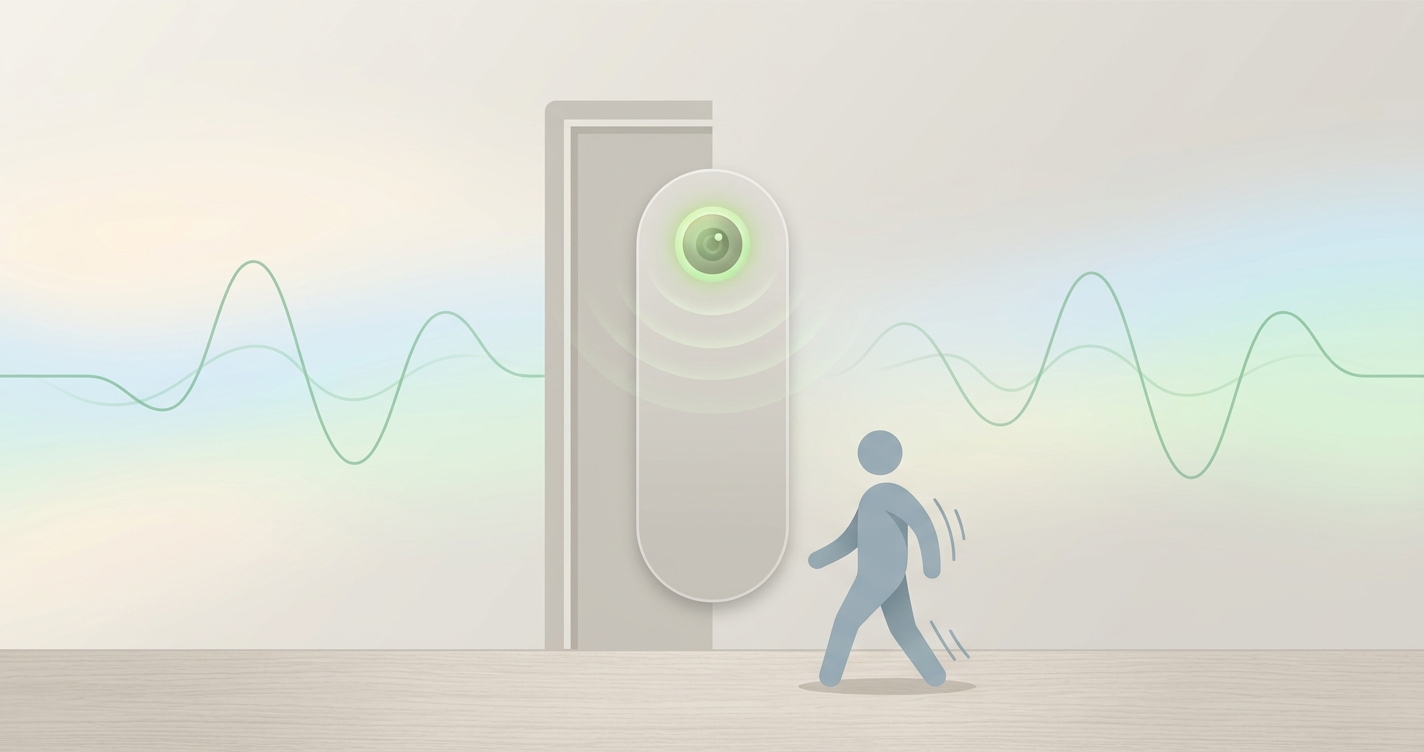
A school entrance is one of the densest human throughput points in any community. Several hundred children, staff, and visitors funnel through a handful of doors inside a ten minute window every morning, then disperse into shared classrooms for seven hours. That geometry makes the entrance the single best place to interrupt a respiratory outbreak before it compounds, and it is why school health screening at the door has moved from a pandemic-era improvisation toward a permanent design problem for kiosk manufacturers and IoT platform providers. The hardware question is no longer whether a device can read a child as they walk past, but how to do it fast enough, accurately enough, and unobtrusively enough to actually change transmission curves.
A prospective cohort study at a large public university found that daily temperature screening detected almost no COVID-19 cases on its own, because the majority of infected individuals were afebrile at the moment of screening. The finding reframed entrance monitors as a triage layer, not a diagnostic gate.
Why school health screening starts at the entrance
The case for entrance monitoring rests on timing rather than precision. A febrile child identified at 8:05 a.m. and sent home never sits in a classroom of twenty-five peers for the day. Even modest sensitivity at the door removes the highest-shedding symptomatic cases from the building before lunch. That is the core value proposition for any school health screening deployment: it is a population-level filter operating at the chokepoint, not a clinical instrument operating on an individual.
Contactless measurement is what makes the chokepoint workable. A device that requires a child to stop, hold still, and touch a sensor destroys throughput and creates a queue, which is itself an infection risk. Camera-based approaches change the math. Infrared thermography reads skin surface temperature at a distance, and remote photoplethysmography (rPPG) extracts pulse and respiration-rate signals from subtle color changes in facial video. Neither requires contact, and both can run on the same camera-and-compute stack that a check-in kiosk already carries.
The hard truth from the literature is that temperature alone is a weak signal. Dr. Babak Shadgan's review of infrared thermography studies through 2021 concluded that skin-surface scanning relies too heavily on detecting high fever and should not be relied on exclusively. Aaron Mah and colleagues reached a similar verdict in 2022, reporting that infrared thermography did not accurately measure core body temperature and was not appropriate as a standalone fever screening device. The design response is not to abandon the entrance monitor but to widen what it measures.
Comparing screening approaches at the door
The decision facing device makers is which sensing modality to embed, and each carries a different accuracy, throughput, and integration profile.
| Screening approach | Contact required | Throughput | Catches afebrile cases | Integration cost |
|---|---|---|---|---|
| Manual handheld thermometer | Near-contact | Low (one at a time) | No | Minimal hardware, high labor |
| Fixed infrared thermal camera | None | High | No | Moderate, needs blackbody reference |
| Embedded rPPG (pulse, respiration, temp proxy) | None | High | Partially, via multi-vital signal | Software on existing camera stack |
| Thermal plus rPPG fusion | None | High | Better than either alone | Higher compute, sensor fusion logic |
A few practical patterns follow from this comparison:
- Temperature is necessary but not sufficient; a fever signal confirms a likely case but misses the pre-symptomatic majority.
- Adding heart rate and respiration rate gives the monitor a second and third axis, which is where rPPG earns its place in the stack.
- Throughput collapses the moment contact is required, so any door-facing design should treat contactless capture as a baseline requirement, not a premium feature.
- A blackbody reference source materially improves thermal accuracy and should be budgeted into fixed-camera bills of materials.
Industry applications for entrance monitoring hardware
Kiosk manufacturers
For kiosk builders, the school entrance is a variant of the waiting-room and pharmacy use cases already in production, but with stricter throughput and a younger, shorter, more mobile subject population. Cameras must be mounted and tuned for a wide height range, and the capture window may be a second or two as a child walks past rather than a stationary thirty-second sit. That pushes processing to the edge, because cloud round-trips cannot keep pace with a morning rush.
IoT platform providers
Entrance monitors rarely live alone. A platform provider connecting dozens of school buildings needs aggregated, de-identified signal: how many elevated readings today, trending against the district baseline, flagged for the school nurse rather than for any individual record. The IoT layer turns isolated door readings into an early-warning dashboard that can spot an outbreak forming across a district before any single school notices.
Public health and facilities teams
Facilities and public health officials treat the monitor as one layer in a defense-in-depth strategy that also includes ventilation, hand hygiene, and stay-home policy. The entrance device works best when its output triggers a clear human workflow: a flagged student is directed to a secondary check by a trained staff member with a calibrated clinical thermometer, not turned away by a machine.
Current research and evidence
The evidence base is candid about limits, which is useful for honest product design. A retrospective cohort study of temperature screening in school-aged children found very low sensitivity: febrile children at school were rarely COVID-positive, and confirmed-positive children were rarely febrile at the moment of screening. The U.S. FDA noted in June 2020 that non-contact temperature assessment devices are not effective as the only means of detecting infection.
Measurement technique matters as much as the device. Work on fever-screening thermography has shown that the inner canthi, the corners of the eyes, and full-face maximum temperatures give more reliable readings than the forehead, and that consensus measurement protocols meaningfully reduce error. Best-practice reviews published in MDPI journals catalog the external factors that degrade infrared accuracy, including ambient temperature, humidity, airflow, and the subject having just arrived from outdoors, which is precisely the condition at a school door in winter.
This is where multi-signal capture becomes the research-backed path forward. Newer work explores machine learning applied to thermography and protocol standardization to lift sensitivity, and rPPG adds physiological context that a thermometer cannot, namely an elevated resting heart rate or altered respiration pattern. No single contactless signal is diagnostic. The combination, interpreted as a triage probability rather than a verdict, is what gives an entrance monitor a credible role in catching illness early.
The Future of school health screening
The trajectory points toward fusion and discretion. Instead of a conspicuous thermal gate, the next generation of entrance hardware looks like an ordinary check-in display or doorway panel that quietly captures several vitals in the second a child passes. Edge compute handles the inference locally, only aggregate flags leave the building, and individual readings are never stored as identifiable health records. That architecture answers the two objections that sank early thermal-only deployments: poor sensitivity and privacy concern.
Expect three shifts over the next few years. First, sensor fusion that combines thermal and rPPG signals into a single calibrated risk score. Second, tighter on-device privacy, with ephemeral processing that discards raw video. Third, standards convergence, as the measurement-location and environmental-control lessons from the thermography literature get baked into firmware defaults rather than left to each installer. For device makers, the differentiator will not be the camera. It will be the embedded vitals engine that turns ordinary video into a reliable, multi-signal triage layer.
Frequently asked questions
Can an entrance monitor actually stop an outbreak by itself? No, and no credible vendor should claim it. Research consistently shows temperature screening alone misses most infected individuals because they are afebrile when scanned. An entrance monitor removes the highest-shedding symptomatic cases at the chokepoint and feeds an early-warning signal to staff. It is one layer in a broader strategy that includes ventilation, hygiene, and stay-home policy.
Why use contactless measurement instead of a handheld thermometer? Throughput and infection control. A handheld device processes one person at a time and requires a staff member at close range, which creates queues and exposure. Contactless camera-based capture lets hundreds of students pass during a short morning window without stopping, and keeps screening staff out of the immediate breathing zone.
What does rPPG add beyond a thermal reading? Thermal cameras report only skin-surface temperature, a single and often weak signal. Remote photoplethysmography extracts pulse and respiration-rate information from facial video, giving the monitor additional physiological axes. Combining these signals into one triage score improves on what either provides alone.
How is student privacy protected at a screening kiosk? Modern designs run inference at the edge and discard raw video immediately, transmitting only de-identified aggregate flags to a nurse or district dashboard. No identifiable health record needs to be created at the door for the system to function as a triage filter.
For kiosk manufacturers and IoT platform providers building toward this kind of multi-signal entrance monitor, Circadify is addressing exactly this space with an embedded vitals engine designed to run on existing kiosk, tablet, and smart-display hardware. The hardware integration guide for clinical kiosks walks through how contactless rPPG capture fits into a door-facing screening stack.