Should medical devices still need to touch you in 2026?
By 2026, the question of whether medical devices need physical contact is shifting due to contactless technologies like rPPG. We analyze the trends.
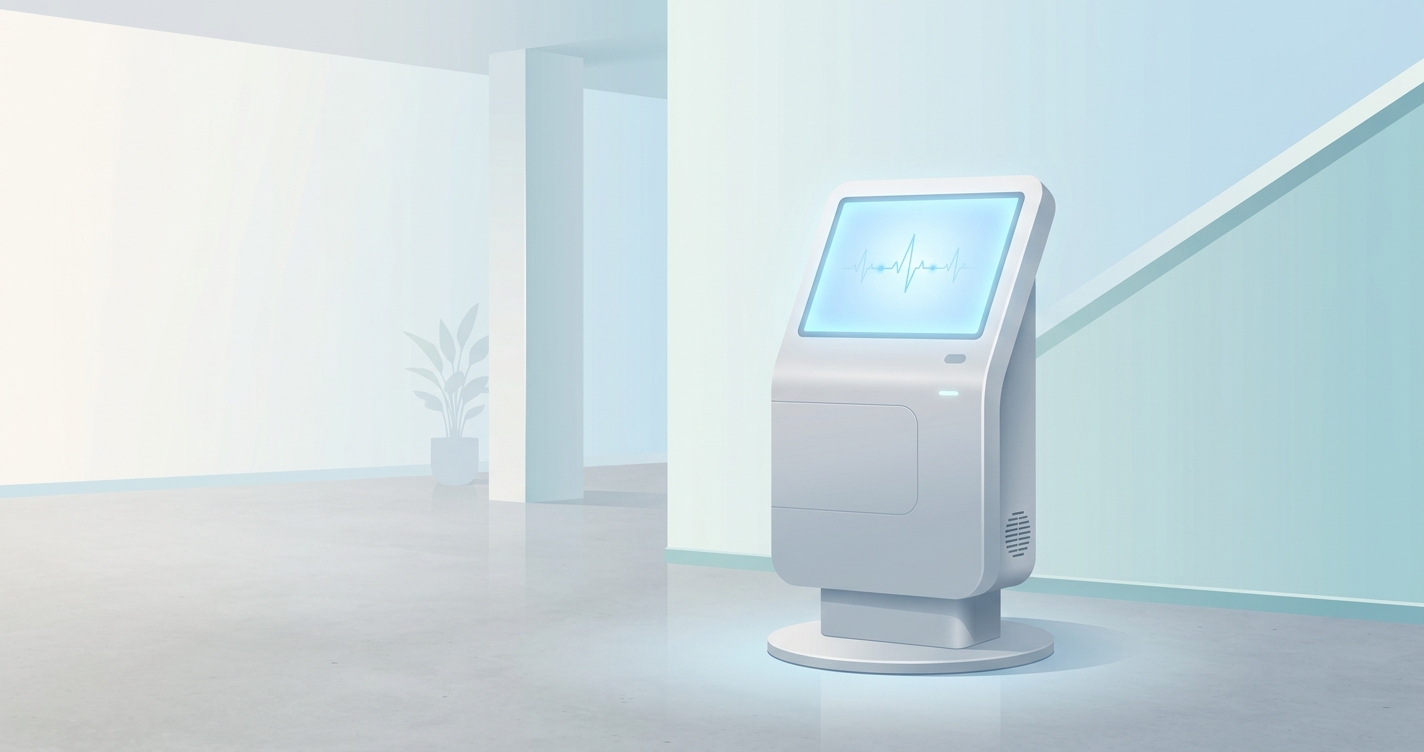
The question of whether a medical device needs to make physical contact to get a reading is no longer a purely academic exercise. For decades, the answer was an unequivocal yes. Blood pressure cuffs, pulse oximeters, and thermometers all relied on direct patient contact. However, with the maturation of camera-based remote photoplethysmography (rPPG) and other contactless sensing technologies, the paradigm is shifting. By 2026, the health-tech industry, from kiosk manufacturers to IoT platform providers, will have to answer a more complex question: when is contactless the better option?
According to a 2023 industry analysis, the global market for contactless health monitors is projected to reach $36.67 billion in 2026, with growth accelerating to a predicted $109.99 billion by 2035. This represents a compound annual growth rate (CAGR) of 12.98% from 2026 to 2035, underscoring the rapid adoption of this technology.
The state of contactless medical devices in 2026
The core driver of the "medical devices contactless 2026" trend is the convergence of several key technologies: high-resolution cameras, sophisticated computer vision algorithms, and edge computing hardware capable of running complex models in real-time. This combination allows a simple camera, like one found in a health kiosk or even a personal tablet, to measure physiological signs like heart rate, breathing rate, and blood pressure variations without any physical touch. Research from institutions like the University of South Australia has been instrumental in validating these techniques. A 2022 study led by Professor Javaan Chahl demonstrated the ability to measure vital signs from a distance using drone-mounted cameras, highlighting the potential for non-invasive monitoring in a variety of settings. The primary technology, remote photoplethysmography (rPPG), works by detecting subtle changes in light reflected from the skin, which correspond to the blood-volume pulse. These signals, once processed, provide a wealth of cardiovascular information.
The push towards contactless solutions is not just a technological curiosity; it's a direct response to tangible market needs. The COVID-19 pandemic accelerated demand for infection control, making touchless interfaces a public health imperative. This was particularly evident in high-traffic areas like hospital waiting rooms, retail clinics, and airport health screening stations. Beyond hygiene, contactless methods offer significant benefits for patient comfort, especially for continuous or frequent monitoring scenarios in senior living facilities or for infants in neonatal care, as documented in research from institutes like the MIT Media Lab.
| Feature | Traditional Contact-Based Devices | Contactless rPPG-Based Systems |
|---|---|---|
| Measurement Method | Physical sensors (cuffs, probes, electrodes) | Camera and light analysis (rPPG) |
| Patient Experience | Can be intrusive, uncomfortable, or require preparation | Non-invasive, no physical sensation |
| Infection Control | Requires sterilization between uses, carries risk | Zero contact, inherently hygienic |
| Deployment | Requires trained personnel for placement | Can be embedded in kiosks, mirrors, or displays |
| Continuous Monitoring | Can be difficult and irritating for the patient | Ideal for ambient, long-term monitoring |
| Limitations | Motion artifacts, subject to placement errors | Sensitive to lighting conditions, motion, skin tone |
Industry Applications
The move toward contactless medical devices is creating new product categories and reshaping existing ones. The implications span from public-facing health kiosks to specialized clinical hardware.
Public health screening kiosks
Health kiosks in pharmacies, gyms, and workplaces are a primary application for medical devices contactless 2026.
- Enhanced Accessibility: Touchless operation lowers the barrier to use and improves ADA compliance.
- Improved Throughput: Faster, non-contact measurements mean less time per user and reduced queues.
- Lower Maintenance: Eliminating contact-based sensors reduces the number of moving parts and components that require regular cleaning and calibration.
Remote patient monitoring (rpm) and telehealth
Contactless technology allows RPM to be more passive and less intrusive.
- Ambient Sensing: Devices embedded in smart displays or mirrors can gather trend data on a patient's condition without requiring them to wear a device.
- Improved Adherence: By removing the need for a patient to actively use a device, long-term monitoring adherence can be significantly improved.
Senior and neonatal care
In environments with sensitive populations, the benefits of contactless monitoring are particularly pronounced.
- Reduced Distress: Eliminates the need to wake a sleeping infant or disturb an elderly patient for routine checks.
- Early Warning: Continuous, ambient monitoring can detect subtle changes in vital signs that may be early indicators of distress or illness.
Current research and evidence
The evidence base for contactless vital sign monitoring is growing rapidly. A pivotal 2020 study by Hao-Yu Wu, et al., published in Nature Communications, established a deep learning-based framework, "DeepPhys," for video-based physiological measurement that significantly improved accuracy and robustness to head motion. This work built upon earlier foundational research by pioneers like Wim Verkruysse and his colleagues, whose 2008 paper in Optics Express was among the first to demonstrate that remote PPG was feasible with standard digital cameras. More recently, a 2023 review published by researchers at the University of Oxford analyzed over 100 studies on rPPG, concluding that while the technology is robust for heart rate, further validation is required for blood pressure estimation against clinical standards. The consensus is that while the technology is promising, standardization and regulatory approval remain key hurdles for widespread clinical adoption. Challenges in handling different skin tones, lighting variations, and motion artifacts are active areas of research.
The future of contactless devices
Looking beyond 2026, the trajectory for contactless medical devices is toward greater integration and "smarter" systems. The ultimate goal is to move from spot-check measurements to continuous, ambient health awareness. This involves embedding rPPG and other sensors into the environment itself, in smart mirrors, televisions, and vehicle dashboards. As edge AI hardware becomes more powerful and energy-efficient, the ability to process this data locally will be critical for privacy and real-time responsiveness. The technology will likely evolve from measuring basic vitals to detecting more complex conditions, such as atrial fibrillation or respiratory distress, by analyzing subtle patterns in the physiological data over time.
Frequently asked questions
Q: Are contactless medical devices as accurate as traditional devices? A: The accuracy of contactless devices, particularly those using rPPG, is a major area of research. For heart rate and breathing rate, many systems can achieve accuracy comparable to traditional contact-based methods under good conditions. Blood pressure estimation is more complex and is still an evolving field. Accuracy can be affected by factors like lighting, skin tone, and motion.
Q: What is rPPG? A: Remote photoplethysmography (rPPG) is a camera-based technology that measures vital signs by detecting subtle, imperceptible changes in the color of light reflected from human skin. These changes are caused by the blood volume pulse, the wave of blood that flows through your vessels with each heartbeat.
Q: What are the main benefits of contactless health monitoring? A: The primary benefits include improved hygiene and infection control (no physical contact), enhanced patient comfort (non-invasive and non-intrusive), and the potential for continuous, long-term monitoring in a more seamless and ambient way. This is especially valuable for sensitive populations like infants and the elderly.
The shift toward contactless measurement is a significant development in the medical device industry. At Circadify, our expertise lies in providing the embedded rPPG engine that powers these next-generation devices. For medical device companies, kiosk manufacturers, and IoT platform providers looking to integrate this technology into their products, our comprehensive hardware integration guide provides a roadmap for a successful implementation. To learn more, visit circadify.com/custom-builds/clinical-kiosks.