Is embedded vital-sign monitoring coming to my smart TV?
Will your next smart TV be able to monitor your vital signs? This report covers the technology, research, and future of embedded vital sign monitoring in smart TVs.
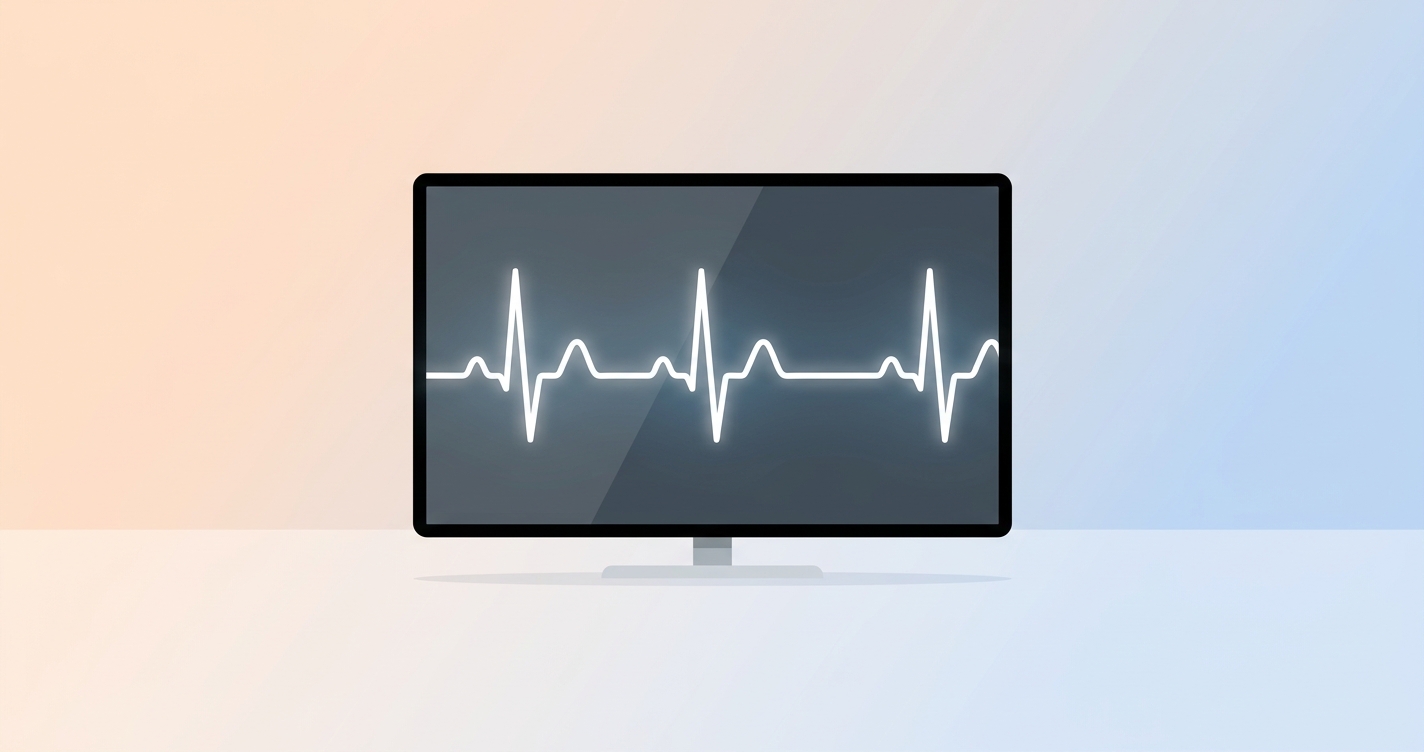
The television has evolved from a simple broadcast receiver into a sophisticated, connected hub for entertainment, communication, and now, potentially, health monitoring. As consumers grow more accustomed to tracking their own health data with wearables, the idea of integrating these capabilities into everyday home devices is no longer a futuristic concept. The question is no longer if our devices will monitor our health, but which devices will do it and how soon. For the millions of consumers who have a smart TV in their living room, the next frontier in passive health data collection might be the screen they already watch every day.
"The global market for remote patient monitoring devices is projected to reach $175.2 billion by 2027, driven by the demand for in-home monitoring solutions." - Statista (2022)
The Rise of rPPG in Consumer Electronics
The core technology that would enable smart TV vital sign monitoring is remote photoplethysmography (rPPG). This technique uses a standard RGB camera, like the one already built into many high-end smart TVs for video conferencing, to detect minute changes in light reflection from the skin. These changes, invisible to the human eye, correspond to the pulsing of blood through subcutaneous capillaries. By analyzing this video feed, sophisticated algorithms can extract physiological data like heart rate, respiratory rate, and even blood pressure variability.
Unlike traditional medical devices that require physical contact, rPPG is entirely contactless. This is the key that unlocks its potential for ambient sensing applications. The technology doesn't require the user to wear a special device or even actively initiate a measurement. For a smart TV, this means it may monitor the vital signs of a person sitting on the couch, watching a movie, without them ever having to think about it. This seamless integration is a significant step toward making health monitoring a continuous and passive part of daily life.
| Feature | Traditional Home Monitoring (Cuffs, Clips) | Smart TV-Based rPPG Monitoring |
|---|---|---|
| User Interaction | Active (User must apply device) | Passive (No user action required) |
| Measurement Type | Contact-based | Contactless (Camera-based) |
| Frequency | Episodic (Manual spot checks) | Potentially Continuous or Frequent |
| Hardware | Dedicated medical device | Existing consumer electronic device |
| Data Integration | Often requires manual logging or separate app | Can be integrated into smart home platforms |
| User Experience | Can be cumbersome and disruptive | Seamless and unobtrusive |
The primary advantages of integrating this technology into a smart TV are:
- Accessibility: Smart TVs are ubiquitous, providing a ready-made platform for large-scale deployment.
- Ease of Use: The passive nature of data collection removes barriers for non-technical users and those with mobility issues.
- Long-term Trending: Frequent, consistent measurements can provide valuable data for identifying long-term health trends.
Industry Applications
Telehealth and remote patient monitoring
For healthcare providers, the ability to monitor a patient's baseline vital signs remotely is a game-changer. A smart TV equipped with rPPG could provide daily check-ins for individuals with chronic conditions like hypertension or heart failure, alerting care teams to potential issues before they become critical.
Elder care and independent living
In senior living facilities or for individuals aging in place, smart TV vital sign monitoring offers a non-intrusive way to ensure well-being. It can provide peace of mind for family members and caregivers by offering regular wellness updates without compromising the user's privacy or independence.
Consumer wellness and fitness
The technology also has applications in the consumer wellness space. A fitness app running on a smart TV could track a user's heart rate during a workout, providing real-time feedback and performance tracking without the need for a chest strap or smartwatch.
Current research and evidence
While the application of rPPG to smart TVs is still an emerging field, the underlying science is well-established. Researchers have spent years validating the accuracy and reliability of camera-based vital sign monitoring.
A foundational study by Ming-Zher Poh, Daniel J. McDuff, and Rosalind W. Picard at the MIT Media Lab (2010) demonstrated that heart rate could be accurately measured from webcam video feeds under normal ambient light. Their work laid the groundwork for many subsequent advancements. More recently, research has focused on improving the robustness of rPPG algorithms to challenges like motion artifacts and changing light conditions, which are critical for real-world home environments. A 2017 study led by W. Wang and colleagues, published in Optics Express, explored the use of ambient light for remote photoplethysmographic systems, confirming the feasibility of using low-cost webcams for this purpose. These and other studies confirm that consumer-grade cameras are capable of capturing a reliable physiological signal.
The primary challenge is no longer signal acquisition but signal processing. Deep learning models are now being used to differentiate the subtle rPPG signal from video noise, significantly improving accuracy. As these models become more efficient, they can be embedded directly into the processors found in smart TVs and other edge devices.
The future of smart TV vital sign monitoring
The path to widespread adoption involves surmounting a few key hurdles. First, hardware manufacturers must continue to integrate high-quality cameras into their devices. Second, software developers and device manufacturers must address the significant privacy and security concerns associated with collecting passive health data. User consent and transparent data handling policies will be essential for building consumer trust.
Finally, for the technology to be used for medical purposes, regulatory clearance from bodies like the FDA will be necessary. This requires rigorous clinical validation to prove that the measurements are accurate and reliable enough for clinical decision-making.
Despite these challenges, the trajectory is clear. The convergence of consumer electronics, ambient sensors, and healthcare is accelerating. The question is not whether embedded vital-sign monitoring is coming to your smart TV, but when it will become a standard feature.
Frequently asked questions
Q: How accurate is vital sign monitoring with a camera? A: Research has shown that for heart rate, rPPG can achieve accuracy comparable to contact-based consumer devices under the right conditions. Accuracy for other vital signs like respiratory rate and blood pressure is an active area of research and development.
Q: Do I need a special camera or lighting? A: The technology is designed to work with standard RGB cameras found in many smart TVs, laptops, and smartphones. It uses ambient light, so no special lighting is required, though performance is generally best in a well-lit room.
Q: Is my health data safe? A: Data security and privacy are critical concerns for any health application. Reputable solutions process video data on the local device, meaning the video stream never leaves the TV. Only the final vital sign data is encrypted and sent to the cloud, and only with explicit user consent.
Q: Will this replace my doctor or medical devices? A: No. This technology is intended for wellness monitoring and as a supplemental tool for telehealth. It is not a replacement for clinical diagnosis or medical-grade devices. Always consult with a healthcare professional for any medical concerns.
As a leader in embedded rPPG technology, Circadify is at the forefront of this technological shift, providing the core engine to help device manufacturers integrate contactless vital sign monitoring into their hardware platforms. For companies building the next generation of clinical kiosks, smart displays, and other health-aware devices, our solutions provide a clear path from concept to deployment. To learn more about integrating this technology into your hardware, see our Hardware integration guide.