
How does a self-check-in kiosk actually measure blood pressure?
A deep dive into the technology behind automated health kiosks, comparing traditional cuff-based methods with emerging contactless camera-based solutions.
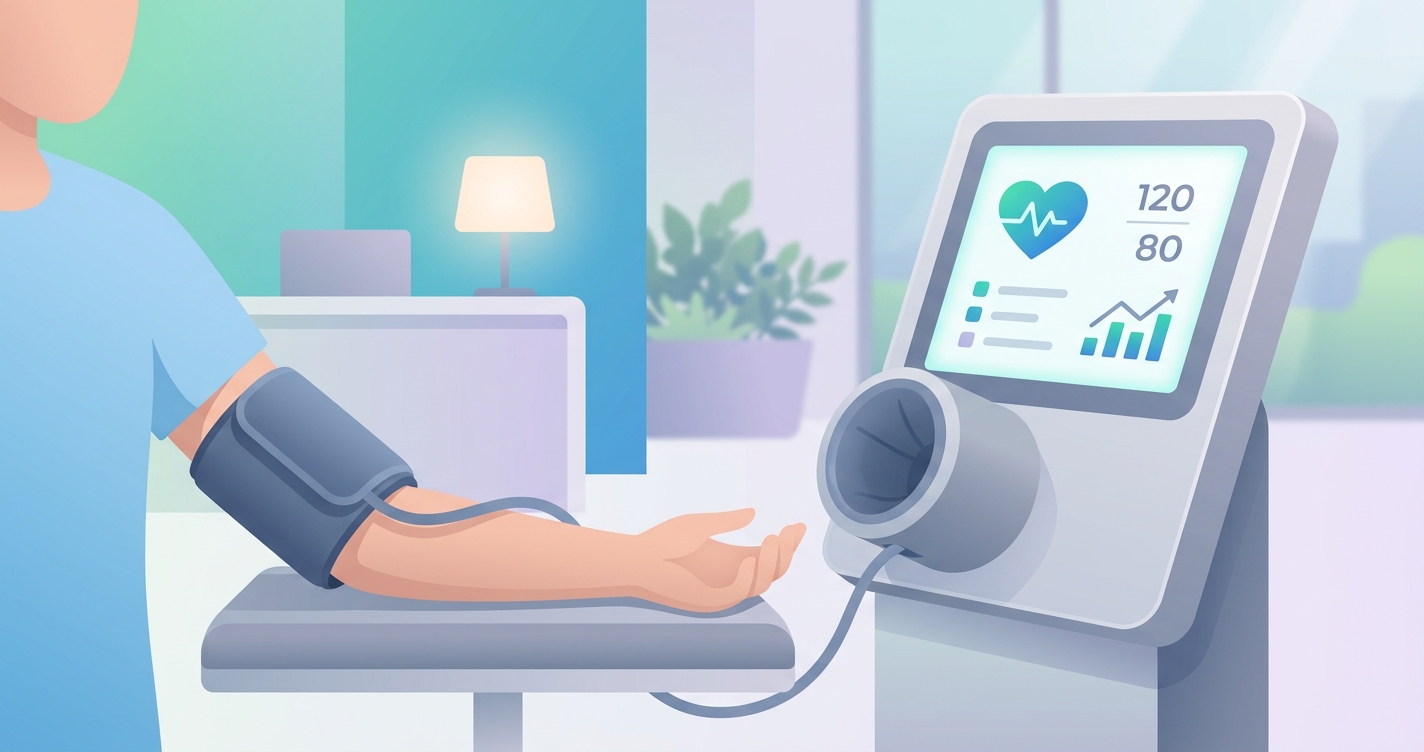
The self-service kiosk is an increasingly common fixture in healthcare settings, from hospital waiting rooms to retail pharmacies. These automated stations promise to streamline patient check-in, reduce administrative burdens, and provide a convenient way to capture baseline health metrics. For many patients, the most notable feature is the integrated blood pressure cuff. But how does a machine, without a clinician present, actually perform this vital measurement? The answer lies in a combination of established engineering principles and sophisticated software, a field where the technology for a self check in kiosk blood pressure reading is rapidly evolving.
"A 2022 comparative trial found that the accuracy of self-check-in kiosk blood pressure monitoring was 65.8% when compared to daytime ambulatory blood pressure monitoring (ABPM), the clinical gold standard." - Comparative trial published in the National Library of Medicine (2022)
How kiosks measure blood pressure
The vast majority of automated blood pressure measurement devices, including those found in self-service kiosks, use a technique called the oscillometric method. This process does not "listen" for the sounds of blood flow (the auscultatory method) in the way a doctor or nurse does with a stethoscope and a manual cuff. Instead, the kiosk's internal system is designed to detect pressure changes within the cuff itself.
The process begins when a user places their arm into the cuff and initiates the measurement. An internal pump inflates the cuff to a pressure high enough to temporarily stop blood flow through the brachial artery. Then, the kiosk's control valve slowly and precisely releases the pressure. As the pressure falls, blood begins to flow again, creating vibrations, or oscillations, in the arterial wall. These oscillations are transferred to the cuff and detected by a pressure sensor inside the machine.
The kiosk's software analyzes the pattern of these oscillations. The point at which the oscillations begin to rapidly increase in amplitude corresponds to the systolic blood pressure (the top number), which is the peak pressure in the arteries during a heartbeat. The point at which the oscillations reach their maximum amplitude is used to calculate the Mean Arterial Pressure (MAP). The diastolic blood pressure (the bottom number), representing the minimum pressure in the arteries between heartbeats, is typically determined when the oscillations abruptly decrease. Proprietary algorithms, refined over decades of research, translate this raw oscillation data into the final blood pressure reading displayed on the screen.
Comparison of blood pressure measurement technologies
| Feature | Oscillometric Method (Cuff-Based) | Remote Photoplethysmography (rPPG) |
|---|---|---|
| Mechanism | Detects pressure oscillations in a cuff as it deflates. | Uses a standard camera and software to analyze light reflected from the skin, detecting changes in blood volume. |
| User Interaction | Requires physical contact; user must insert arm into a cuff. | Contactless; user sits in front of a camera. |
| Primary Measurement | Arterial pressure wave oscillations. | Changes in skin color, corresponding to blood flow pulses. |
| Hardware | Inflatable cuff, pump, pressure sensor, control valve. | Digital camera, processor, light source. |
| Prevalence in Kiosks | The dominant technology in current deployments. | Emerging technology, currently in development and early deployments. |
Key considerations for accurate kiosk readings include:
- Correct Cuff Size: An improperly sized cuff is a primary source of error.
- Proper User Positioning: The user should be seated calmly, with their arm supported at heart level.
- Motion Artifacts: Movement during the reading can interfere with the detection of oscillations.
- Machine Calibration: Kiosks require regular calibration and maintenance to ensure accuracy.
Industry Applications
The deployment of self check in kiosk blood pressure technology spans several environments, each with unique requirements.
Retail and pharmacy clinics
In retail settings, kiosks offer a quick, self-service health check for shoppers and patients. They serve as a public health tool, allowing individuals to monitor their blood pressure conveniently and identify potential hypertension that may warrant a follow-up with a clinician.
Corporate wellness programs
Companies are incorporating health kiosks into their wellness programs as a way to provide employees with easy access to health monitoring. This data can help individuals track their health trends over time and encourages preventative care.
Hospital and clinic waiting rooms
In clinical environments, kiosks automate the initial patient intake process. Capturing blood pressure before the patient even sees a nurse can help streamline workflow, reduce wait times, and provide the clinical team with baseline data upon starting the encounter.
Current research and evidence
While convenient, the accuracy of kiosk-based blood pressure measurement is a subject of ongoing research. A significant comparative trial published in 2022 in the National Library of Medicine evaluated the performance of kiosk measurements against those taken by nurses and, crucially, against the "gold standard" of ambulatory blood pressure monitoring (ABPM), where a patient wears a cuff for 24 hours.
The study found that kiosk measurements were, on average, higher than the ABPM readings, with systolic pressure being 6.2 mmHg higher and diastolic pressure 7.9 mmHg higher. The overall accuracy of the kiosk compared to ABPM was 65.8%. While this suggests limitations, the study also noted that the kiosk's performance was similar to that of nurse-measured blood pressure in the same clinical setting. This indicates that while not a perfect substitute for ambulatory monitoring, a self check in kiosk blood pressure reading can be a useful screening tool, comparable to a one-time reading in a clinic.
The future of kiosk blood pressure: contactless measurement
The next frontier for kiosk-based health screening is the move away from the cuff. The emerging technology of remote photoplethysmography (rPPG) uses a standard camera to measure blood pressure without any physical contact. By analyzing the subtle, imperceptible changes in the color of light reflected from a person's skin, rPPG algorithms can detect the pulse and infer blood pressure and other vital signs.
This camera-first approach, which is the core of Circadify's technology, eliminates the mechanical complexity and hygiene concerns of cuffs. It allows for a more seamless and accessible user experience. Integrating rPPG into a self-check-in kiosk means a patient could have their vital signs measured simply by looking at the screen during the check-in process. Researchers are actively refining these algorithms to account for variables like skin tone, lighting conditions, and slight user movements to match and eventually exceed the reliability of traditional methods.
Frequently asked questions
Q: Are the blood pressure machines in pharmacies and grocery stores accurate? A: They can be a good tool for screening and tracking trends, but their accuracy depends on proper use, machine calibration, and cuff size. Research shows their performance can be comparable to a single reading taken by a nurse but may not be as precise as 24-hour ambulatory monitoring.
Q: How does a camera measure blood pressure without a cuff? A: This technology, called remote photoplethysmography (rPPG), uses a sensitive camera to detect tiny changes in the color of your skin. These changes are caused by the pulse of blood flowing through the vessels beneath the skin. Advanced software analyzes the video feed of your face to translate these color changes into a blood pressure measurement.
Q: What is the main cause of inaccurate readings from a self-check-in blood pressure kiosk? A: The most common source of error is an improperly fitting cuff. If the cuff is too small, the reading may be artificially high; if it's too large, the reading may be too low. Other factors include user movement or talking during the measurement, and incorrect arm positioning.
As kiosk manufacturers and healthcare providers look to build the next generation of self-service clinical devices, the integration of advanced, contactless sensing technology is becoming a primary focus. The journey from cuff-based systems to camera-based rPPG represents a significant step toward making health monitoring more accessible, integrated, and efficient. To learn more about integrating camera-based vitals into your hardware project, explore Circadify's hardware integration guide at circadify.com/custom-builds/clinical-kiosks.