Do I Need a Doctor's OK for a Health Screening Kiosk?
Understand health screening kiosk regulations, FDA clearance for medical device software, and compliance for clinical decision support tools.
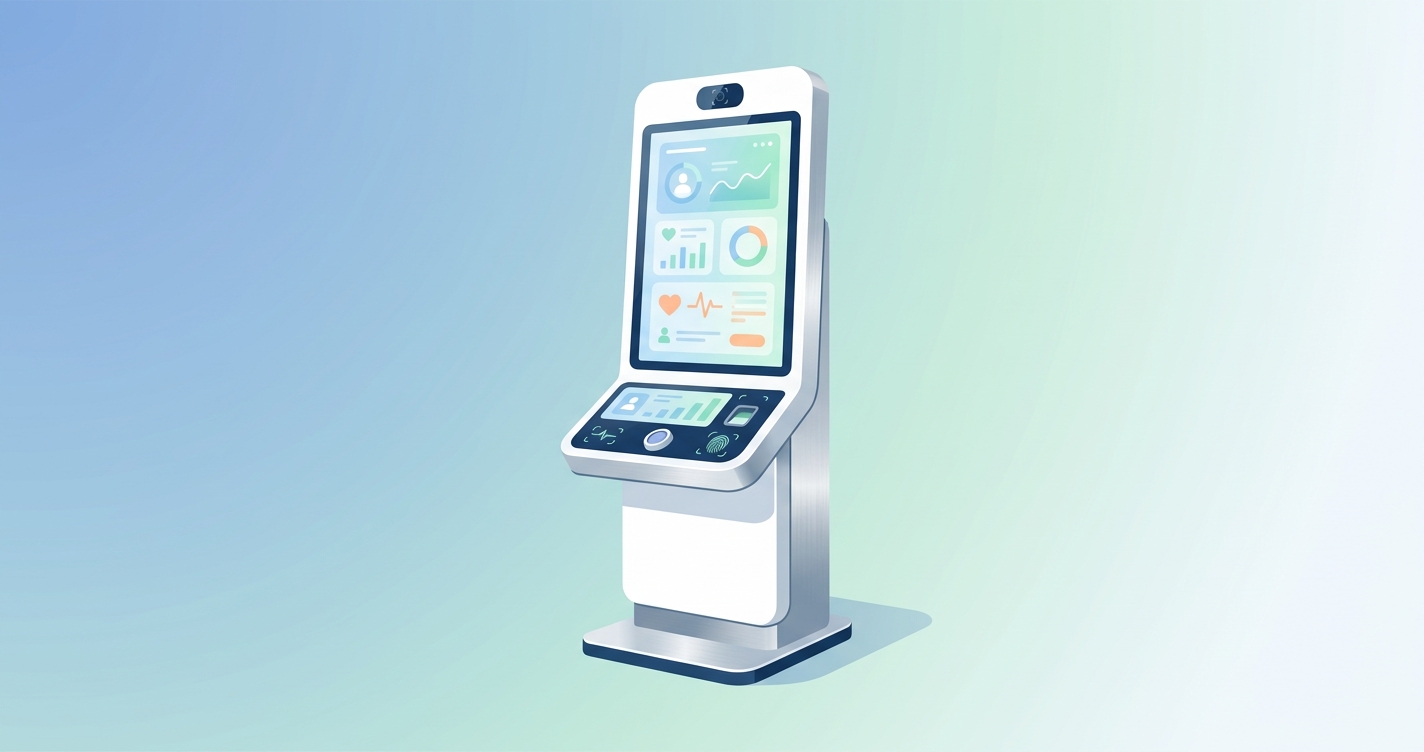
The deployment of self-service clinical hardware is accelerating, but the compliance framework surrounding these endpoints remains the most common bottleneck for product managers. Hardware engineering teams scoping physiological measurement features eventually hit the same roadblock: defining the exact health screening kiosk regulations that apply to their specific use case. The regulatory boundary separates consumer wellness products from formal diagnostic tools, and crossing that line triggers extensive auditing, submission, and validation processes. For manufacturers building the next generation of embedded health sensors, understanding the compliance requirements early in the scoping phase prevents costly delays during prototyping and pilot deployments.
"The global health kiosks market reached approximately $1.07 billion in 2024, with check-in and vital screening units dominating revenue share as healthcare facilities decentralize basic triage functions." - Grand View Research, 2024
Navigating health screening kiosk regulations
The regulatory status of any automated health station depends entirely on its intended use and the claims made by the manufacturer. The Food and Drug Administration (FDA) establishes a clear dividing line between products that promote a healthy lifestyle and those intended to diagnose, cure, mitigate, prevent, or treat a disease.
For engineering teams building contactless monitoring or integrated vital sign stations, the primary framework to consult is the FDA "General Wellness: Policy for Low Risk Devices" guidance. Originally formalized in 2019 and updated in January 2026, this policy clarifies when low risk products are not actively regulated as medical devices. A general wellness device must only encourage a general state of health or relate healthy lifestyle choices to reducing the risk of certain chronic diseases. If a kiosk simply measures and displays heart rate or respiratory rate for fitness or stress management purposes without interpreting those metrics for a clinical diagnosis, it often falls under enforcement discretion.
However, the moment the software interprets a metric to identify an arrhythmia, diagnose hypertension, or suggest a specific clinical intervention, it falls out of the general wellness category. Software functions that analyze patient data to provide a specific diagnostic output trigger formal review.
Clinical decision support software rules
Hardware teams cannot rely solely on physical hardware definitions; the software engine powering the kiosk is heavily scrutinized. Understanding saas fda regulation is critical for connected devices that process physiological data in the cloud or on the edge.
The 2022 FDA guidance on clinical decision support software rules outlines four strict criteria for software to be excluded from medical device regulation under the 21st Century Cures Act. To be exempt, the software must meet all of the following:
- It is not intended to acquire, process, or analyze medical images or signals.
- It is intended for the purpose of displaying, analyzing, or printing medical information.
- It is intended to support or provide recommendations to a healthcare professional.
- It is intended to enable the healthcare professional to independently review the basis for the recommendations.
Kiosk manufacturers frequently stumble on the first and fourth criteria. If a kiosk uses a camera to extract a photoplethysmography signal from a patient's face, it is explicitly acquiring and analyzing a medical signal. This immediately pulls the software out of the non-device exemption and pushes it into the realm of regulated medical software. Furthermore, if the algorithm is a "black box" machine learning model where the clinician cannot understand how the vital sign was calculated, it fails the fourth criterion, requiring formal fda clearance for medical device software.
Compliance pathways: wellness vs. clinical
The dividing line between a general wellness product and a regulated device shapes the entire hardware bill of materials and software architecture.
| Feature Category | General Wellness Device | Regulated Medical Device |
|---|---|---|
| Primary Function | Promotes general healthy lifestyle | Diagnoses or treats a specific condition |
| Metric Output | Raw data (e.g., heart rate) | Interpreted data (e.g., disease alert) |
| Regulatory Oversight | Enforcement discretion | Requires 510(k), De Novo, or PMA |
| Target User | General consumer or employee | Patient under clinical care |
| Hardware Demands | Standard commercial components | Rigorous medical grade verification |
Hardware and product teams evaluating these regulatory pathways should document the following parameters during the initial design phase:
- Intended use statement: Define exactly what the kiosk will claim to do before selecting sensors.
- Signal processing location: Determine if physiological data is processed on device via edge computing or sent to a cloud server.
- Output presentation: Map out how the data is displayed to the end user versus how it is displayed to a clinician.
- Risk profile: Evaluate the potential harm to a user if the kiosk provides an inaccurate measurement.
Data privacy and saas architecture compliance
Beyond physiological measurement accuracy, health screening kiosk regulations intersect heavily with data privacy laws. When a kiosk captures biometric information, such as a continuous video feed for vital sign extraction, the system architecture must protect patient data.
For manufacturers dealing with saas fda regulation, the security of the data pipeline is evaluated alongside the clinical efficacy of the algorithm. If a kiosk relies on a cloud server to process vital signs, the transmission protocol must be encrypted, and the cloud environment must comply with the Health Insurance Portability and Accountability Act (HIPAA) or regional equivalents.
Engineering teams are increasingly turning to edge computing to simplify this compliance burden. By processing the physiological signals locally on the kiosk's internal processor, the device does not transmit raw biometric data to the cloud. Only the finalized, numerical vital sign output is sent to the electronic health record. This architectural decision significantly reduces the risk profile of the device and streamlines the regulatory auditing process.
Industry Applications
Corporate campuses and occupational health
Employers are deploying health screening stations as part of corporate wellness initiatives. In these environments, the kiosks typically operate under the general wellness policy. They measure baseline metrics like resting heart rate, body mass index, and perceived stress levels to encourage healthier lifestyle habits among employees. Because these systems do not claim to diagnose occupational injuries or specific illnesses, they avoid the heavy compliance burden of clinical hardware.
Retail pharmacy settings
Retail pharmacies use health stations to bridge the gap between consumer wellness and clinical care. A standard blood pressure kiosk in a pharmacy aisle often falls under established regulatory classifications. However, as pharmacies add more advanced sensors, product teams must carefully align their marketing claims with their regulatory filings. If the kiosk claims to screen for specific cardiovascular diseases, it requires formal clearance.
Hospital check-in and triage
Clinical waiting rooms represent the most demanding environment for self-service hardware. When a kiosk captures vital signs that are immediately routed into an electronic health record to influence triage priority, the software processing those signals is subject to strict regulatory scrutiny. Engineers building for this environment must ensure their signal acquisition software meets rigorous accuracy and validation standards.
Current research and evidence
Regulatory bodies evaluate real world deployments to refine their guidance. A prominent example occurred in January 2024, when Pursuant Health received 510(k) clearance for a self-service kiosk offering retinal imaging. This clearance demonstrated the FDA's willingness to approve advanced diagnostic hardware for public spaces, provided the manufacturer completes the necessary clinical validation.
Researchers analyzing market trends have tracked this regulatory evolution. A 2024 industry analysis by Grand View Research noted that while basic check-in kiosks hold the largest revenue share, the integration of complex physiological measurement tools is driving future growth. The challenge for manufacturers is that adding diagnostic capabilities increases the timeline to market.
A 2022 review of clinical decision support guidance by regulatory analysts at Arnold and Porter highlighted that software providing a specific preventative or diagnostic directive falls outside the non-device exemption. This analysis forces kiosk manufacturers to carefully design their user interfaces. If a kiosk tells a user "You have high blood pressure, consult a doctor immediately," it acts as a diagnostic tool. If it simply reads "Blood pressure 140/90" and provides a generic chart of standard ranges, it may maintain a lower risk profile.
The future of health screening kiosk regulations
The rapid advancement of artificial intelligence and contactless sensor technology is forcing regulatory frameworks to adapt. As algorithms become more capable of extracting physiological data from standard camera feeds, the distinction between a software function and a hardware medical device will blur further.
Future iterations of regulations will likely focus heavily on the datasets used to train measurement algorithms. Bias mitigation, demographic representation, and cross platform accuracy will become standard components of software audits. Furthermore, as edge computing allows more processing to happen directly on the kiosk rather than in the cloud, regulatory bodies will require manufacturers to prove the stability and security of their local compute environments.
Manufacturers building the next generation of clinical hardware must adopt a modular approach to compliance. By isolating the regulated physiological measurement engine from the general user interface software, engineering teams can update the kiosk's display and workflow without triggering a full regulatory recertification of the entire machine.
Frequently asked questions
What defines a general wellness device under current guidelines? A general wellness device is a low risk product intended to maintain or encourage a healthy lifestyle. It cannot make claims about diagnosing, curing, or treating specific diseases. If a kiosk only encourages fitness or relaxation, it typically qualifies for enforcement discretion.
Does clinical decision support software require FDA clearance? It depends on the software's function. If the software acquires and analyzes medical signals to provide a specific diagnostic directive, it is generally regulated as a medical device. If it simply displays medical information and allows a clinician to independently review the basis of a recommendation, it may be exempt.
Can a health screening kiosk diagnose a medical condition? A kiosk can only diagnose a condition if the specific hardware and software components have received formal regulatory clearance for that exact diagnostic purpose.
How does software as a medical device apply to kiosks? Software as a medical device applies when the software processing the physiological data is intended for medical purposes, regardless of the hardware it runs on. If a kiosk uses a cloud based algorithm to analyze a vital sign for abnormalities, that algorithm is evaluated under medical software regulations.
As medical device companies and IoT platform providers scope their next generation of automated triage stations, navigating the compliance requirements for physiological measurement is critical. Circadify is actively addressing this space by providing an embedded rPPG engine designed for flexible integration into clinical hardware and smart displays. For product teams looking to add robust contactless measurement to their systems while managing complex engineering requirements, review the hardware integration guide at circadify.com/custom-builds/clinical-kiosks.