
Contactless Stress Monitoring for Smart Devices
Discover how device manufacturers embed contactless stress monitoring into hardware using rPPG and heart rate variability to capture vitals via standard cameras.
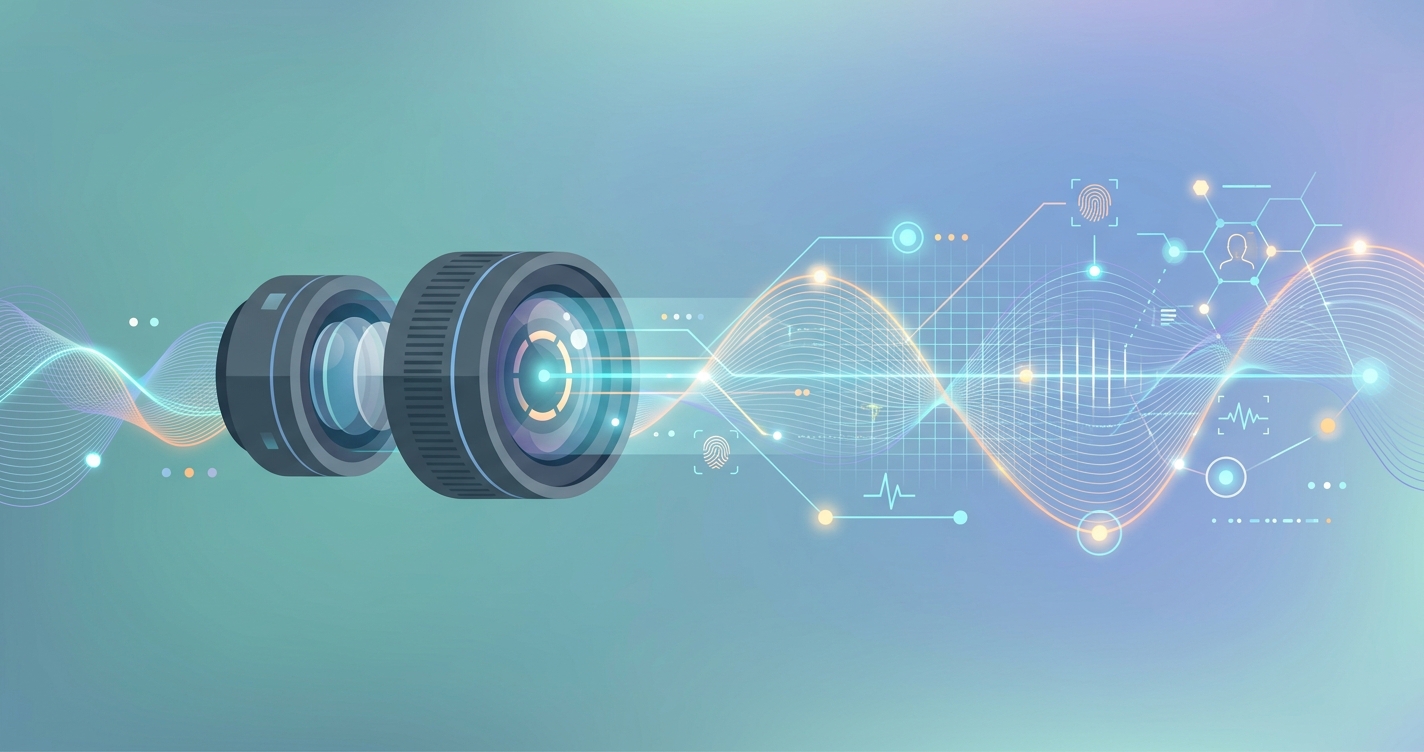
For hardware engineering teams and product managers, the bill of materials for physiological measurement is undergoing a quiet revolution. Historically, capturing continuous data on human stress required dedicated physical peripherals: electrocardiogram patches, chest straps, or fingertip pulse oximeters. Today, standard RGB camera modules are replacing these discrete sensors. By using remote photoplethysmography (rPPG) and advanced edge computing, manufacturers can transform almost any camera-equipped hardware into a contactless stress monitoring device. This shift from physical contact to optical estimation opens new pathways for frictionless physiological observation across clinical waiting rooms, smart home environments, and automotive cabins. Instead of forcing users to comply with wearable hardware, engineering teams are embedding vital sign extraction directly into the screens and kiosks users already interact with.
"The integration of remote photoplethysmography and deep learning models has demonstrated that subtle, imperceptible color shifts in human skin can accurately proxy the autonomic nervous system's stress response, removing the need for physical sensor compliance."
- Fontes et al., 2024
The mechanics of ambient stress detection
To understand how a standard camera measures psychological and physiological stress, hardware integrators must look at the underlying cardiovascular mechanisms. Every time the human heart beats, it pumps oxygenated blood through the vascular network. Oxygenated hemoglobin absorbs specific wavelengths of light. When ambient light hits the face, a portion of it is absorbed by the blood vessels beneath the skin, and a portion is reflected back to the camera sensor.
A standard RGB camera captures these microscopic variations in red, green, and blue light absorption. By running this video feed through an rPPG engine, the system extracts a volumetric pulse wave that mirrors the data generated by a traditional hospital pulse oximeter. However, extracting a raw pulse is only the first step. To quantify stress, the algorithm must perform highly accurate heart rate variability measurement.
Heart rate variability (HRV) is the biological biomarker for stress. The human autonomic nervous system is divided into the sympathetic branch (responsible for the "fight or flight" stress response) and the parasympathetic branch (responsible for the "rest and digest" relaxation response). When a user is stressed, the sympathetic nervous system dominates, forcing the heart to beat like a metronome with highly regular intervals between beats. When a user is relaxed, the parasympathetic nervous system introduces natural, healthy irregularities between beats.
By analyzing the precise inter-beat intervals (IBI) captured by the camera, the system calculates time-domain metrics like the root mean square of successive differences (RMSSD). Low HRV indicates high stress, while high HRV indicates physiological recovery and relaxation.
Hardware paradigms compared
Hardware teams scoping an embedded vitals monitoring feature usually evaluate the tradeoffs between traditional wearable sensors and camera-based systems.
| Feature | Traditional Wearable (PPG/ECG) | Contactless Camera (rPPG) |
|---|---|---|
| Sensor Hardware | Dedicated physical diodes, electrodes | Standard RGB or near-infrared camera |
| User Compliance | Requires active wearing and charging | Passive measurement, zero friction |
| Primary Metric | Direct electrical or optical pulse | Optical pulse wave estimation |
| Data Processing | Typically processed on microcontroller | Requires edge AI / neural network inferencing |
| Maintenance | High wear and tear, battery degradation | Low physical degradation, software updatable |
| Hygiene | Requires sanitization between users | Completely cross-contamination free |
Overcoming technical constraints
Historically, ambient stress detection struggled outside of strictly controlled laboratory environments. In recent years, significant advancements in machine learning and hardware acceleration have resolved the most pressing technical constraints:
- Varying illumination: Modern algorithms utilize dynamic region-of-interest tracking to compensate for shadows and changing light conditions in real time.
- Motion artifacts: Deep learning models, specifically 1D Convolutional Neural Networks (CNNs), are trained to separate physiological signals from rigid head movements and facial expressions.
- Skin tone inclusivity: Training datasets have been aggressively expanded across the Fitzpatrick scale to ensure the camera accurately measures blood volume changes regardless of melanin concentration.
- Edge compute limits: Highly optimized neural networks now run locally on standard ARM or x86 architectures, eliminating the need to stream video frames to the cloud for processing.
Industry applications for embedded vitals monitoring
As the technology matures, product managers are moving rPPG out of the research lab and into commercial hardware roadmaps. The ability to measure stress and vitals passively is transforming several key verticals.
Clinical kiosks and telehealth terminals
In healthcare environments, the waiting room is being reimagined as a diagnostic space. By integrating an embedded vitals monitoring engine into self-service check-in kiosks, healthcare providers can capture a patient's baseline stress level, heart rate, and respiration rate before they even see a triage nurse. This ambient data collection reduces white-coat syndrome, where the stress of the clinical environment artificially inflates vitals, by capturing physiological metrics while the user is simply reading on-screen instructions.
Smart displays and enterprise wellness
Hardware manufacturers are deploying the IoT health sensor concept across enterprise and consumer environments. In high-stress corporate environments, smart displays and connected mirrors equipped with rPPG can provide employees with real-time feedback on their cognitive load. Because the technology requires zero physical contact, users are far more likely to engage with the wellness feedback loop. The barrier to entry drops from "strap on this chest monitor" to "sit in front of your monitor as usual."
Automotive and operator safety
The automotive and heavy machinery industries are actively integrating camera-based stress monitoring into driver-facing sensor arrays. By continuously analyzing the operator's heart rate variability and respiration rate, the vehicle's onboard computer can detect rising stress levels, fatigue, or sudden cognitive overload. This data can trigger active safety interventions, adjusting cabin environment settings or alerting dispatchers in commercial fleet operations.
Current research and evidence
The transition of remote photoplethysmography from an experimental concept to a viable commercial integration is backed by a decade of rigorous academic research.
Early foundational work by Daniel McDuff, Javier Hernandez, and Rosalind Picard (MIT and Microsoft Research, 2016) demonstrated the validity of using digital cameras to capture physiological parameters under varying conditions. Their research proved that off-the-shelf camera sensors possessed the fidelity required to track the microscopic color shifts associated with the human pulse, laying the groundwork for non-contact stress analysis.
Subsequent studies focused on refining the extraction of heart rate variability for specific psychological assessments. Research by Farid Bousefsaf, Choubeila Maaoui, and Alain Pruski (Université de Lorraine, 2019) advanced the methodology by focusing on continuous monitoring in naturalistic settings. They demonstrated that camera-based systems could reliably extract instantaneous heart rate variations, allowing for the real-time classification of mental stress.
More recently, the focus has shifted toward algorithmic robustness. Research by Fontes et al. (2024) detailed comprehensive methods for enhancing stress detection by pairing rPPG with deep learning models. Their work highlights how sophisticated neural networks can filter out environmental noise and motion artifacts, resulting in high classification accuracy for stress states compared to baseline rest states. This peer-reviewed evidence provides the scientific foundation that hardware manufacturers require when justifying the integration of rPPG into commercial products.
The future of contactless stress monitoring
The future of hardware-based health tracking is entirely ambient. As edge computing platforms become more powerful and power-efficient, the ability to run complex computer vision models locally will become ubiquitous. This is critical for privacy; by processing the video feed directly on the device and immediately discarding the visual data, manufacturers can ensure that strict data security protocols are maintained. The user's face never leaves the local memory buffer, only the resulting physiological numbers are transmitted or stored.
Furthermore, the industry will see a shift from point-in-time measurements to continuous, longitudinal stress analysis. A kiosk or smart device that measures vitals once provides a snapshot; an ecosystem of IoT health sensors that passively monitor an individual throughout their day provides a comprehensive metabolic and psychological profile.
Frequently asked questions
How does a camera measure stress levels?
A camera measures stress by detecting microscopic color changes in the skin caused by blood flow (remote photoplethysmography). Software extracts the exact timing between heartbeats from this video feed to calculate heart rate variability (HRV). Low HRV is a physiological indicator of high stress.
What kind of camera hardware is required?
Most modern embedded rPPG solutions are designed to work with standard off-the-shelf RGB camera modules. While specialized near-infrared (NIR) cameras can be used for low-light environments, a standard webcam-quality sensor with a resolution of 720p or 1080p and a frame rate of 30 frames per second is typically sufficient.
Is contactless stress monitoring secure and private?
When implemented correctly, it is highly private. Best-in-class systems utilize edge computing, meaning the rPPG algorithm runs directly on the local hardware (like the kiosk or smart display's processor). The camera processes the frames to extract the vital signs in real-time and immediately discards the video data. No images or videos are sent to the cloud.
Can rPPG measure metrics other than stress?
Yes. The same volumetric pulse wave used to calculate heart rate variability for stress detection can also be analyzed to determine resting heart rate, respiration rate, and in some advanced implementations, blood oxygen saturation and estimated blood pressure trends.
Integrating rPPG into your hardware roadmap
Product teams building the next generation of clinical kiosks, smart displays, and connected health stations face a critical buy-versus-build decision for their sensor architecture. Developing a robust, motion-tolerant rPPG algorithm in-house requires years of specialized computer vision engineering and physiological research. Circadify provides a highly optimized embedded rPPG engine designed specifically for seamless hardware integration, allowing manufacturers to add contactless vitals capabilities to their existing camera platforms securely and efficiently. To explore technical specifications, processing requirements, and integration pathways for your hardware roadmap, review the integration documentation at circadify.com/custom-builds/clinical-kiosks.