Can a doctor's office kiosk catch problems my nurse misses?
A research-style analysis of whether automated health kiosks in a doctor's office can detect issues that manual vital sign checks might miss.
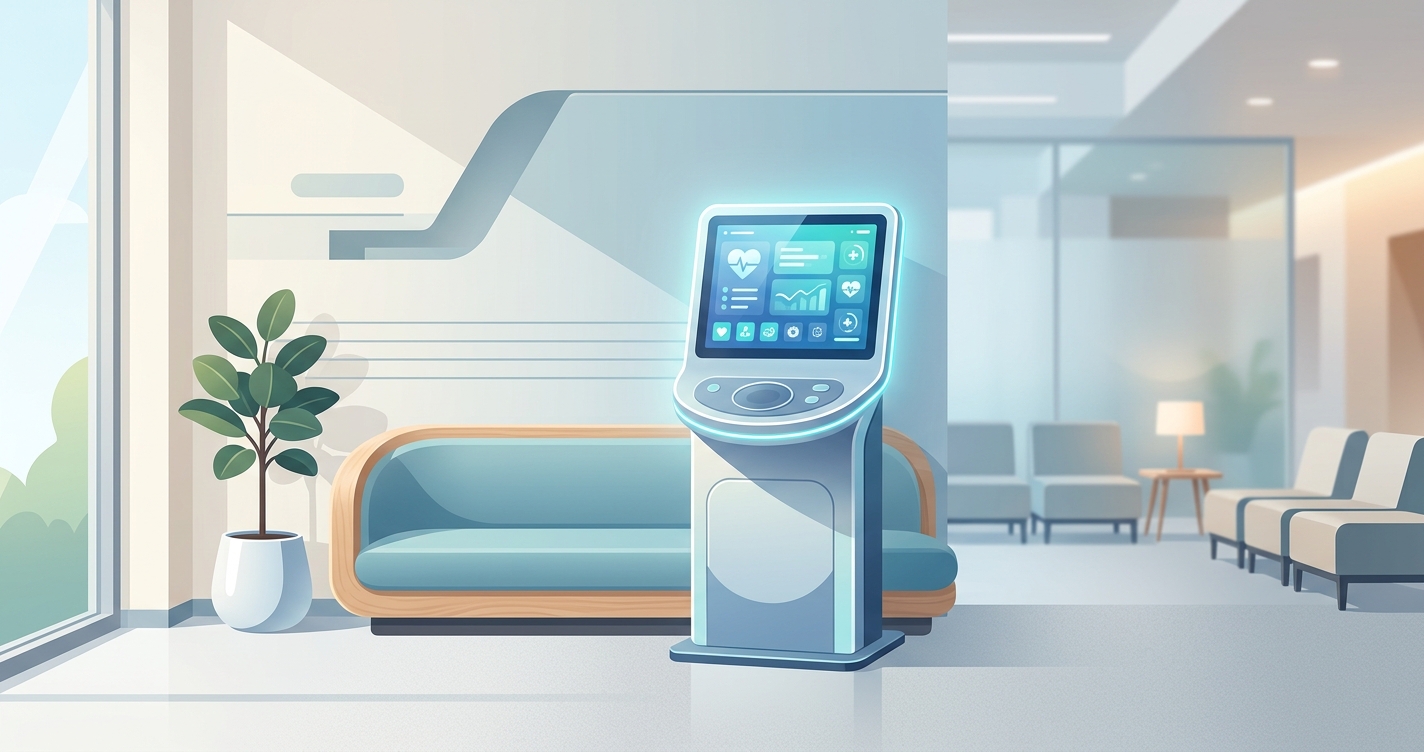
The routine of having a nurse take your blood pressure, temperature, and pulse is a familiar cornerstone of almost every clinical visit. It is a fundamental step in assessing your health. But this manual process, as standard as it is, is subject to a surprising number of variables that can lead to inaccuracies. With the introduction of automated health screening stations at check-in, a new question arises: can a doctor's office kiosk catch problems that a busy nurse might inadvertently miss? The answer lies not in replacing the nurse, but in augmenting their expertise with consistent, data-driven technology.
"Inaccurate measurements are not benign. Inappropriate management decisions based on faulty vital signs data can occur in 20% to 45% of cases, potentially leading to delayed or unnecessary treatments."
- Research synthesis on vital sign measurement errors.
How a doctor office kiosk catches missed problems
The value of an automated kiosk is its ability to standardize the data collection process and reduce the incidence of common human errors. While a nurse's clinical judgment is irreplaceable, the manual measurement of vital signs is a repetitive task performed under time pressure in a dynamic environment. A well-designed doctor office kiosk can catch missed problems by controlling for variables that are difficult to manage in a manual workflow. Studies have shown that manual data collection and transcription are prone to error. A 2020 study by van der Vegt et al. found that 30% of manually recorded vital sign records had at least one error, whereas automated collection had none. This data integrity is a primary advantage of kiosk-based systems.
These systems are designed to perform the measurement under controlled, repeatable conditions every time. They don't get distracted, they don't have to hurry to the next patient, and they record the data directly into the electronic health record (EHR) without transposition errors. This level of consistency can reveal subtle changes or trends in a patient's vitals over time that might be masked by the noise of manual measurements. For example, a consistent, slight elevation in blood pressure on every visit as measured by a kiosk is a clear signal for the clinician, whereas manually recorded readings might fluctuate enough to obscure the trend.
| Feature | Manual Vitals Measurement (by Nurse) | Automated Kiosk Measurement |
|---|---|---|
| Consistency | High variability; depends on individual technique and environment. | High; standardized procedure for every patient. |
| Transcription Error | Possible when manually entering data into an EHR. | Eliminated; data is sent directly to the EHR. |
| Patient-Related Factors | Susceptible to "white coat" syndrome, patient conversation, and inconsistent positioning. | Can be designed to minimize variability with on-screen instructions and controlled timing. |
| Time Efficiency | Requires dedicated staff time for each patient measurement. | Frees up nursing staff for higher-value clinical tasks. |
| Equipment Error | Relies on staff to check calibration and use correct cuff sizes. | Can perform automated self-checks and enforce procedural steps. |
Common sources of error in manual vital sign collection that automated systems help mitigate include:
- Incorrect Blood Pressure Cuff Size: Using a cuff that is too small or too large is a frequent cause of inaccurate readings.
- Improper Patient Positioning: Readings can be affected if the patient's arm is not at heart level, their back is unsupported, or their legs are crossed.
- "White Coat" Hypertension: The anxiety of a clinical encounter can temporarily raise blood pressure. A kiosk allows the patient to sit quietly for a few minutes before the measurement begins, often leading to a more accurate resting reading.
- Observer Bias: This can include rounding numbers to the nearest zero or five, or subconsciously influencing the reading based on a patient's history.
- Data Transcription Errors: Mistakes made when typing manually recorded numbers into the patient's electronic health record.
Industry Applications
For medical device companies and kiosk manufacturers, the trend towards automated vitals screening represents a significant opportunity. The technology is not limited to primary care offices; it has wide-ranging applications across the healthcare and wellness landscape.
Primary and specialty care clinics
In this setting, kiosks streamline the patient intake process, reduce wait times, and provide a rich, accurate dataset before the clinical encounter even begins. This allows nurses and doctors to focus on diagnosis and treatment rather than routine data collection.
Pharmacies and retail health
As pharmacies become hubs for basic health services, self-service kiosks offer a scalable way to provide health screenings for blood pressure, heart rate, and other key indicators. This empowers consumers and provides valuable data for population health initiatives.
Corporate wellness and fitness centers
Companies are increasingly investing in the health of their employees. On-site health kiosks can provide a convenient way for staff to monitor their health, promoting preventative care and reducing healthcare costs.
Current research and evidence
The comparison between automated and manual vital signs is a subject of ongoing study. Research published in the Journal of General Internal Medicine has highlighted that while some automated blood pressure devices may show slight average differences from manual auscultation, their high level of consistency is a key advantage. A study by G. Alpert (2018) emphasized that many sources of inaccuracy in blood pressure measurement are related to procedural errors, such as incorrect patient positioning and using the wrong cuff size, which automated systems can be designed to prevent.
More advanced kiosks are now incorporating contactless, camera-based technologies like remote photoplethysmography (rPPG). This technology analyzes subtle changes in light reflected from a person's skin to measure vital signs like heart rate and respiratory rate without any physical contact. Research in this area is advancing rapidly, focusing on improving accuracy across diverse populations and in various lighting conditions. These developments promise an even more seamless and error-resistant screening process.
The future of clinical kiosks
The integration of health screening kiosks into clinical workflows is accelerating. The future of this technology lies in greater connectivity, more sophisticated sensing capabilities, and the application of artificial intelligence. We can expect to see kiosks that Measure vitals. Run preliminary risk assessments based on the collected data, flagging at-risk patients for immediate attention. The evolution from contact-based sensors to embedded, contactless rPPG will make the screening process faster and more accessible, removing physical barriers and reducing equipment maintenance needs. As these systems become more integrated with electronic health records, they will contribute to powerful longitudinal datasets, enabling a more proactive and preventative approach to healthcare.
Frequently asked questions
Q: Is a health kiosk as accurate as a nurse? A: A kiosk's accuracy comes from its consistency. It reduces common human errors related to the measurement process and data entry. While a nurse's overall clinical assessment is vital, a kiosk can often provide a more standardized and repeatable measurement of vital signs.
Q: What happens if I move or talk during the kiosk measurement? A: Most modern kiosks are designed with on-screen instructions to guide you through the process, including prompts to remain still and quiet during the measurement. If the machine detects excessive movement or artifact, it will typically alert you and repeat the measurement to ensure an accurate reading.
Q: Does my doctor see the results from the kiosk immediately? A: Yes. One of the main advantages of an integrated kiosk is that it transmits the data directly into your electronic health record. Your doctor and nurse can view the results in real-time, often before they even enter the exam room.
The patient check-in process is being fundamentally re-engineered to be faster, more data-driven, and more efficient. Automated kiosks are not replacing healthcare professionals, but rather providing them with better tools to do their jobs. By delivering standardized, accurate, and immediately accessible vital sign data, these systems create a foundation for a more informed and effective clinical encounter. Circadify is at the forefront of this shift, providing the core embedded rPPG engine that powers the next generation of clinical kiosks. To learn more about integrating this technology into your hardware, see our guide at circadify.com/custom-builds/clinical-kiosks.