
7 Health Checks Your Clinic's Kiosk Needs in 2026
A technical breakdown of the 7 essential health screening kiosk features for 2026, comparing traditional hardware peripherals to contactless rPPG vitals.
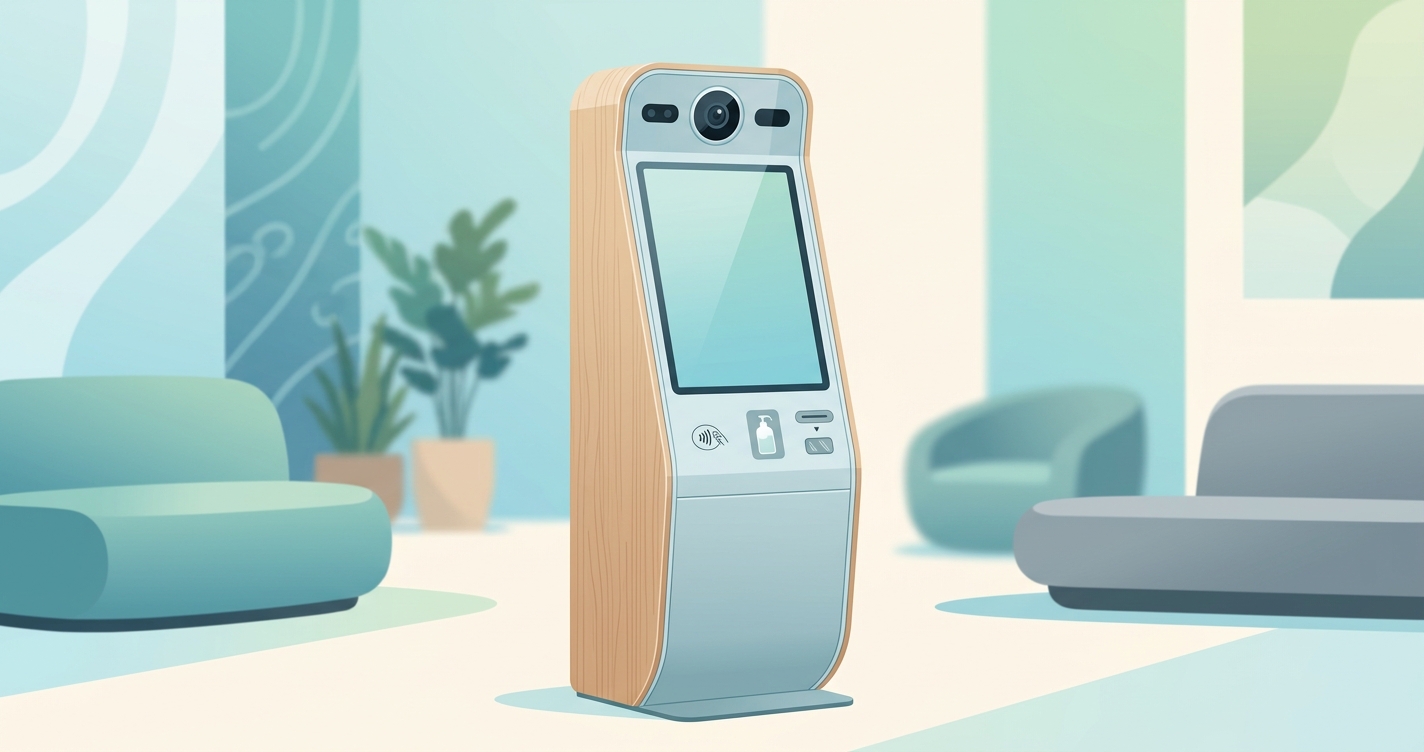
The waiting room is undergoing a long overdue hardware transition. For decades, the check-in process at most clinics relied on a clipboard, a receptionist, and a medical assistant manually recording baseline physiology. Today, the demand for higher patient throughput and lower administrative burden is pushing medical device manufacturers and IoT platform providers to rethink the traditional clinic check-in kiosk. When engineering teams scope out the next generation of self service health stations, they must decide which sensors justify the bill of materials. Selecting the right health screening kiosk features is no longer just about printing a queue ticket. It is about automating clinical workflows, standardizing baseline vitals, and reducing the time a patient spends in the waiting room. As hospitals and outpatient centers face chronic staffing shortages, device makers are tasked with building kiosks that do more than just collect copays. They must function as autonomous diagnostic endpoints.
"Implementing automated patient intake and self-check-in kiosks can reduce time to identification by up to 14 minutes and decrease overall wait times by as much as 46 percent for specific patient groups, fundamentally shifting the administrative burden away from clinical staff."
- Journal of Medical Internet Research (2024)
7 core health screening kiosk features for 2026
When building a self service health station, product managers must balance clinical utility with hardware reliability. A kiosk loaded with fragile peripherals will spend more time out of order than in use. By 2026, the most effective clinical kiosks are shifting from mechanical add-ons to software-defined sensors. Here are the seven critical vitals screening features driving this transition.
1. contactless heart rate and respiratory rate (rppg)
The most significant shift in health screening kiosk features is the move away from wired finger clips. Using remote photoplethysmography (rPPG), a standard digital camera can measure a patient's heart rate and respiratory rate by detecting microscopic color changes in the skin caused by cardiovascular blood flow. This software-based approach eliminates the need for physical contact, which drastically reduces infection risk and minimizes hardware wear and tear. Processing these signals locally on edge architecture ensures that the clinic check-in kiosk can handle varying lighting conditions without relying on a constant cloud connection.
2. camera-based blood pressure estimation
Traditional automated patient intake stations rely on inflatable arm cuffs to read blood pressure. These cuffs are bulky, require constant sanitation, and are highly prone to mechanical failure due to pneumatic wear. Embedded rPPG engines are increasingly capable of extracting optical biomarkers from a video feed to estimate blood pressure contactlessly. By removing the pneumatic pump and inflatable bladder from the bill of materials, hardware manufacturers can design a much slimmer, more reliable self service health station.
3. automated identity verification and check-in
Before any physiological data is recorded, the clinic check-in kiosk must securely identify the patient. Advanced kiosks integrate biometric facial recognition or secure multi-factor QR code scanning to link the impending vitals reading directly to the correct Electronic Health Record (EHR). This eliminates manual data entry errors. The same camera module used for identity verification can often be leveraged for optical vitals measurement, maximizing the return on hardware investment.
4. oxygen saturation (spo2) tracking
Hypoxia screening remains a core requirement for any clinical triage environment. While traditional kiosks feature a pulse oximeter slot built into the chassis, modern optical algorithms can estimate peripheral blood oxygen saturation using the same RGB or near-infrared camera module used for the patient's pulse. By analyzing the different light absorption spectra of oxygenated versus deoxygenated hemoglobin across the face, device makers can capture SpO2 without adding another external hardware component.
5. thermal imaging for core temperature
Fever screening became a strict operational requirement for healthcare facilities in recent years. Incorporating a medical-grade infrared thermopile or a miniaturized thermal camera module allows the kiosk to capture skin temperature instantly as the patient approaches the touchscreen. Unlike handheld temporal scanners that require staff intervention, an integrated thermal sensor logs the data passively, adding zero friction to the automated patient intake workflow.
6. Embedded Behavioral Health and SDOH Triage
A true self service health station does more than measure a pulse. It captures patient-reported outcomes. Interactive digital forms for depression screening, anxiety questionnaires, and Social Determinants of Health (SDOH) allow patients to answer sensitive questions privately at the kiosk. Standardizing this data collection at the front door saves the physician valuable time during the actual clinical encounter and ensures compliance with value-based care reporting metrics.
7. Weight and BMI Calculation Integrations
While body weight cannot be measured optically, integrating a low-profile, ruggedized scale into the physical base of the kiosk ensures that a patient's Body Mass Index (BMI) is calculated automatically. When combined with a sonar or optical height sensor mounted at the top of the kiosk chassis, the system creates a comprehensive physical baseline before the patient ever sits on an exam table.
| Feature Category | Traditional Kiosk Hardware | Contactless Kiosk Architecture | Impact on Bill of Materials |
|---|---|---|---|
| Heart Rate | Wired finger clip (PPG) | Embedded camera (rPPG) | Eliminates peripheral hardware |
| Blood Pressure | Mechanical inflatable cuff | Optical estimation (rPPG) | Removes moving parts and pneumatics |
| Temperature | Handheld temporal scanner | IR thermopile array | Fully automated, zero touch |
| Maintenance | High (frequent sanitation) | Low (glass wipe-down only) | Reduces ongoing service costs |
| Data Processing | Cloud-dependent APIs | On-device edge processing | Lowers latency, ensures privacy |
Why medical device manufacturers are shifting toward camera-based vitals screening features:
- Eliminates mechanical points of failure, such as frayed cables or broken cuff bladders.
- Reduces the cross-contamination risk inherent in high-traffic clinic waiting rooms.
- Consolidates the hardware footprint by using a single high-quality image sensor for multiple physiological measurements.
- Allows for continuous algorithmic updates over the air, improving measurement capabilities without requiring physical hardware swaps.
- Streamlines the overall footprint of the machine, making it easier to deploy in tight clinical hallways.
Industry applications for vitals screening features
Outpatient clinics and urgent care
In high-throughput urgent care environments, automated patient intake is a strict necessity. Kiosks equipped with comprehensive vitals screening features allow a single front desk coordinator to manage multiple arriving patients simultaneously. This triaging capability ensures that high-risk patients are identified immediately upon arrival.
Corporate wellness and occupational health
Employers are increasingly deploying self service health stations in factories and corporate campuses. These kiosks allow employees to check their baseline health metrics regularly without leaving the worksite. Regular monitoring facilitates early intervention for chronic conditions like hypertension, ultimately lowering corporate healthcare costs.
Retail pharmacies and micro-clinics
Retail pharmacies are expanding their physical footprint to serve as primary care access points. A clinic check-in kiosk in a pharmacy setting allows customers to self-administer basic vitals checks while waiting for a prescription. This data can then be routed directly to the consulting pharmacist, providing necessary physiological context for medication therapy management.
Current research and evidence
The underlying technology for contactless vitals measurement in a self service health station is heavily supported by peer-reviewed literature. The foundational work in remote photoplethysmography was established by researchers like Wieringa et al. (2005) and Verkruysse et al. (2008), who demonstrated that ambient light interacting with human skin could yield accurate pulsatile signals via standard digital cameras.
More recently, research has focused on integrating these optical capabilities directly into self-service hardware environments. Researchers at Heriot-Watt University have explored smart self-service systems, such as the "MediCheck Express" for vital monitoring, demonstrating the feasibility of fully automated data capture in public spaces. Furthermore, published studies by researchers Aminuddin Rizal and Yuan-Hsiang Lin (2022) at the National Taiwan University of Science and Technology validated contactless vital signs measurement specifically for healthcare kiosks deployed in intelligent buildings. Their findings prove that rPPG algorithms can operate effectively outside of tightly controlled laboratory lighting, making them viable for real-world automated patient intake scenarios.
The future of health screening kiosk features
By 2030, the clinic check-in kiosk will evolve from a stationary touchscreen into an ambient health sensing environment. Rather than requiring the patient to deliberately place their arm in a cuff or finger in a mechanical slot, the next generation of self service health stations will capture vitals completely passively. As the patient completes their intake forms on the screen, embedded rPPG engines running on local edge processors will continuously analyze their facial blood flow. This will yield a highly accurate, multi-minute average of their cardiovascular state, accounting for "white coat syndrome" and temporary stress. The resulting biometric profile will be far more reliable than a single snapshot taken by a hurried medical assistant.
Frequently asked questions
What are the most essential health screening kiosk features? The core vitals screening features include automated identity verification, contactless heart rate and respiratory rate monitoring, blood pressure estimation, temperature screening, and interactive triage questionnaires.
How does a self service health station measure vitals without physical contact? Modern kiosks utilize a technology called remote photoplethysmography (rPPG). An embedded camera captures subtle changes in the color of the patient's face as blood pumps through the microvascular bed, allowing software to calculate cardiovascular metrics.
Does automated patient intake reduce clinic wait times? Yes. Studies indicate that implementing digital check-in and automated vitals capture can reduce the time to identification and significantly lower overall waiting room delays by shifting administrative tasks to the automated kiosk.
Can rPPG software run directly on the kiosk hardware? Yes, leading embedded rPPG engines are optimized to run entirely on the edge. This means the video feed is processed locally on the kiosk's internal compute module, ensuring strict data privacy and HIPAA compliance without streaming face data to the cloud.
For medical device manufacturers and IoT platform providers, building the next generation of patient intake hardware requires reliable, edge-optimized software. Circadify provides an embedded rPPG engine designed specifically to operate within clinical kiosks, smart displays, and connected health devices. If your engineering team is evaluating health screening kiosk features and wants to integrate contactless vitals seamlessly, explore our hardware integration guide to see how our technology performs in real-world clinical deployments.